
Contact Info
- +919909546900
- salestulsiagro@gmail.com
- Rsn 50/2, Plot No 1, Bharudi Village Main Road, Behind Ajayraj Hotel, N.H. 27, At Bharudi, Dist.: Rajkot(Gujarat)India.
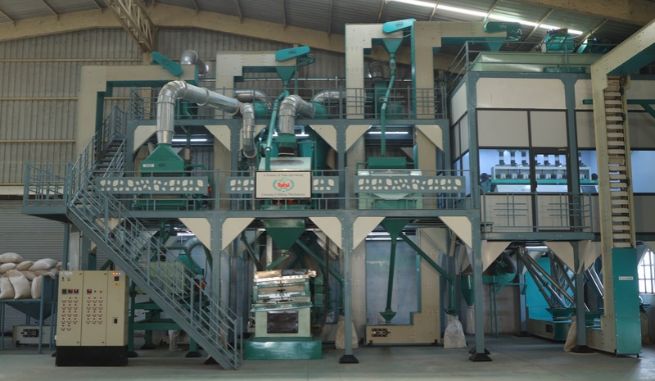
Multi Purpose Grains Cleaning Plant Manufacturers In Chhattisgarh
Tulsi agro is dedicated to agricultural growth by providing efficient grain cleaning and processing solutions. Our mission is to aid the agricultural community by developing mechanical concepts that ease grain preparation, reduce manual labor, and improve cleaning consistency.
We recognize that clean grain is a critical step in storage, milling, marketing, and subsequent processing. That is why we prioritize practical engineering, variable equipment setups, and solutions tailored to customer needs.
A multi purpose grains cleaning plant is an agricultural processing system used to clean various grains and seeds by eliminating impurities such as dust, stones, husks, straw, chaff, and other foreign materials. It enhances grain quality, storage appropriateness, and readiness for subsequent processing.
To successfully treat grains, the factory uses a combination of mechanical and air-based cleaning technologies. Depending on the arrangement, it may have a pre-cleaner, vibrating sieve, aspiration system, destoner, magnetic separator, bucket elevator, and grain output system.
Our locations Chhattisgarh, india
Balod, baloda bazar, balrampur, bastar, bemetara, bijapur
Materials and main components
The plant can be built using suitable industrial materials and components based on its design, capacity, and planned crop.
The main frame, hoppers, structural supports, and machine body are all made of mild steel.
Stainless steel (ss): surfaces that come into touch with products and must be food safe or resistant to corrosion.
Perforated screens and sieves: separate particles based on size.
Blowers and air channels remove lightweight pollutants by air separation.
Bucket elevators and conveyors move grain between processing steps.
Motors, bearings, and drives: these components power the equipment and allow mechanical movement.
Electrical control systems regulate machine functioning and process synchronization.
The multi purpose grains cleaning plant is designed to combine critical grain-cleaning activities into a single coordinated system, reducing superfluous manual handling and promoting consistent processing.
Its primary objectives are to:
Remove any undesired physical contaminants from harvested grains.
Prepare grain for grinding, processing, packaging, and storage.
Improve the cleanliness and marketability of agricultural produce.
Promote more efficient grain handling.
Reduce the reliance for manual cleaning and sorting.
Provide flexible cleaning choices for various crops.
When appropriate contaminant-separation stages are used, they help to protect downstream equipment.